
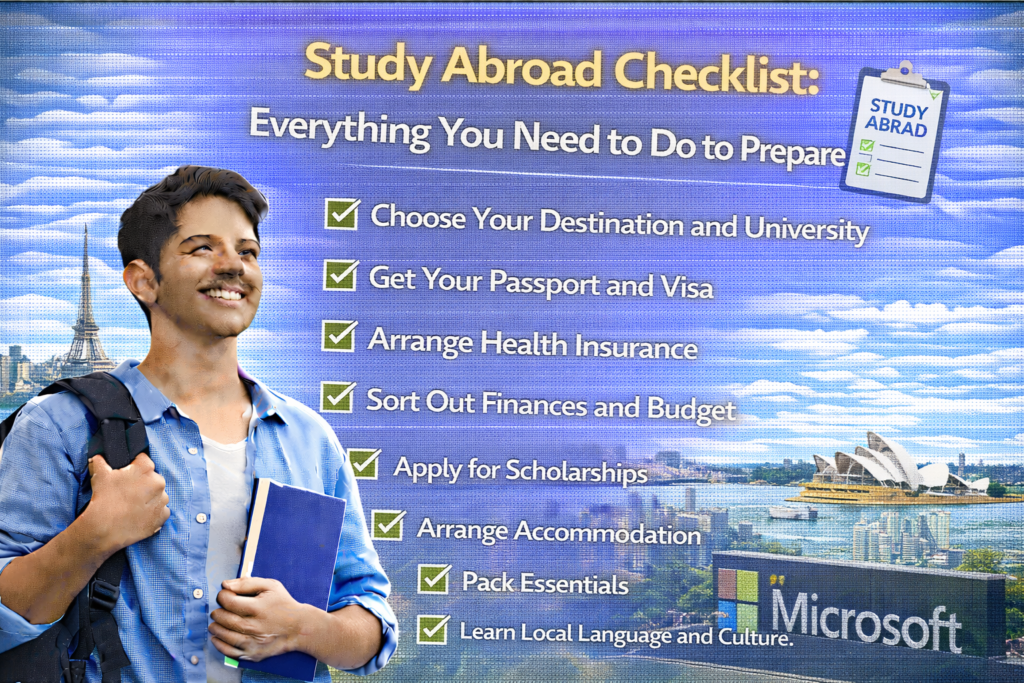
Moving from the intense research and application phase to the actual preparation for departure is a major milestone. For a B.Tech student at SRM looking at high-tech destinations like Japan or Europe, the checklist isn’t just about packing clothes—it’s about ensuring your digital and academic life is ready for a global transition.
In 2026, the study abroad landscape is more digital and integrated than ever. This guide provides a comprehensive, informational breakdown of everything you need to do to prepare for your journey.
1. The Legal & Administrative Foundation
Before you can think about your luggage, you must ensure your legal status is ironclad. This process often takes longer than expected, especially for popular 2026 intake periods.
- Passport Check: Your passport should be valid for at least six months beyond your intended return date. If you are heading to Japan for a year-long research program, ensure your passport doesn’t expire mid-way.
- The Student Visa: This is your most critical document. For Europe (Schengen Visa) or Japan (COE – Certificate of Eligibility), the paperwork can be extensive. You will need your official Acceptance Letter and proof of financial sustainability.
- Financial Documentation: Keep digital and physical copies of your scholarship award letters (like the Erasmus or MEXT) or bank statements. Many countries now require these to be uploaded to a central portal before arrival.
2. Financial Planning for the 2026 Economy
Living in Tokyo, Munich, or Singapore is a different economic reality compared to Kattankulathur.
- Cost of Living Research: Use updated 2026 data to estimate your monthly expenses. Factor in a 10-15% “buffer” for inflation and unexpected costs.
- Multi-Currency Cards: Look into international travel cards (like Niyo, Scapia, or Wise) that offer zero forex markup. This saves you significant money on every transaction.
- Emergency Fund: Always keep a dedicated “emergency stash” in a separate account that you can access even if your primary card is lost or blocked.
3. Health & Safety Readiness
Every country has specific health requirements that must be met weeks before you board your flight.
- Vaccination Records: Check the latest 2026 health protocols for your destination. Some programs in Japan or Europe may require specific boosters or proof of immunization for university housing.
- Travel Insurance: This is non-negotiable. Ensure your policy covers medical emergencies, psychiatric support, and repatriation. Some scholarships provide this, so check your award letter first.
- Medication & Prescriptions: If you take regular medication, bring a 3-month supply and a notarized English translation of your prescription.
4. Packing Smart: The Tech-Focused Checklist
As an AI student, your “packing” is mostly about your digital ecosystem.
5. Managing Culture Shock & Staying Connected
The transition from SRM’s campus to an international university can be mentally taxing.
- Pre-Departure Orientation: If your host university (like UTokyo or a member of the Erasmus consortium) offers a virtual orientation, attend it. It’s the best way to meet other students before you land.
- Language Basics: Even if your program is in English, learning basic phrases in Japanese or the local European language shows respect and makes daily life (grocery shopping, transit) much easier.
- Digital Connectivity: Pre-order a local SIM card or an eSIM so you have data the moment you land. This is vital for navigating from the airport to your new home.